Pr. Ammi Mehdi is a Professor at the University of Paris 8. He is engineer in electronics (2000), PhD in robotics (2005) and Habilitaded to Supervise Research (HDR) in computer science since 2013. His research focuses on the study of pervasive environments and their societal and industrial applications (e-health, smart building, factory of the future, etc.). He addresses this field with a multidisciplinary approach combining artificial intelligence (machine learning, neurosciences, etc.), mechatronic technologies (organic electronics, smart textiles, etc.) and human factors (psychology, behavioral analysis, etc.). Mehdi Ammi was the leader or coleader of several international working groups (IEEE TCH, EuroVR Haptic SIG, etc.), and was involved in more than 20 national & international projects and industrial collaborations.
"Haptic-based Human-Robot Social Communication"
Today, robots must be able to interact with humans and exhibit social interaction skills. Such skills are required to perform specific tasks involving the collaboration with human operators (e.g., collaborative assembly). One of the major social skills is the ability to communicate emotions which is clearly nonverbal. The talk will address the main issues and challenges in the field of social and emotional communication for the human factor and technological sides. A special focus will be made on the study of how human expresses and perceives emotions through the haptic channel, and how we applied these results to human-robot social interaction with physical contact (e.g., handshake).
Andrea Maria Zanchettin
Dr. Andrea Zanchettin was born in Cremona (Italy) in 1983. He received his PhD in Information Technology, from Politecnico di Milano in 2012. From January 2012 until February 2014, he has been research assistant at the Dipartimento di Elettronica, Informazione e Bioingegneria (DEIB). From March 2014 until September 2019, he has been a fixed-term assistant professor at DEIB where he is now a tenured Associate Professor. His research interests are about mechatronic systems, automatic control, and intelligent human-robot interaction. Since 2017, he has been co-founder and co-chair of the IEEE RAS Technical Committee on Collaborative Automation for Flexible Manufacturing (CAFM). Dr. Zanchettin is chair of the Italian Chapter of the IEEE RAS (I-RAS), as well as vice president for industrial activities of the Italian Institute of Robotics and Intelligent Machines (I-RIM). He is also co-founder and member of the Board of Directors of Smart Robots, a spin-off company of Politecnico di Milano.
"Robotics co-workers: A way to include humans and AI in manufacturing operations"
Future manufacturing paradigms will require flexibility and cognitive capabilities to respond to the increasing need for mass customisation. Production environments will be populated by humans and robots. Despite the advancements in technology, today’s collaborative robots are primarily only able to safely stop in case of unintended contacts or collisions with humans, without being able to effectively collaborate with them. The proliferation of low-cost surveillance cameras is gradually introducing the possibility to collect data from the workspace. The position of humans and objects at the factory floor, together with the relationships, can be beneficial for the automated systems to understand and reason on human actions, thus putting workers back at the center of industrial production. Collaborative robots need advanced perception and reasoning capabilities, in order to understand what their human fellow co-workers are doing or about to do. The major challenge is to build computational models to semantically interpret human behaviour. This talk will address the problem of synchronising human and robot activities and proposes a formal control architecture to govern the execution of collaborative application, requiring some degree of coordination between the human and the robot. Assembly applications will be presented as validation of the approach on realistic collaborative assembly.
Jessie Yang
Dr. Jessie Yang is an Assistant Professor in the Department of Industrial and Operations Engineering at the University of Michigan, with a courtesy appointment at the School of Information. She obtained her PhD and MEng in Mechanical & Aerospace Engineering (Human Factors), and her BEng in Electrical and Electronic Engineering all from Nanyang Technological University, Singapore. Prior to joining U-M, she worked as a postdoctoral fellow at MIT. Dr. Yang's research interests include human-autonomy/robot interaction, human factors in high-risk industries, and user experience design. Her research has been funded by NSF, NIH, DoD, AAA Foundation for Traffic Safety, as well as industrial partners.
"Combining Empirical and Computational Approaches to Model and Predict Trust Dynamics in Human-Autonomy Interaction"
Trust has been identified as one central factor in effective human-autonomy interaction. In this talk, I will present the results of two studies examining trust dynamics in human-autonomy interaction. In study 1, we identify three properties of trust dynamics, namely continuity, negativity bias, and stabilization. The three properties characterize a human agent's trust formation and evolution process de facto. In study 2, we propose a computational model of trust dynamics that adheres to the three properties and evaluate the computational model against existing trust inference models. Results show that our model provides superior performance.
Amr Afifi
Mr. Amr Afifi received the bachelor's degree in engineering and material science from the German University in Cairo, Egypt, in 2014, the master's degree in Control Engineering from La Sapienza University, Rome, Italy, in 2019. He is currently working toward a Ph.D. degree with a focus on control methodologies for aerial robots in physical interaction with humans, at the Robotics and Mechatronics Lab at the University of Twente, Enschede, Netherlands, under the supervision of Professor Antonio Franchi. His main research interests lie in Interaction control, optimal control, trajectory optimization and human robot interaction.
"Towards safe physical Interaction between Humans and Aerial-Robots"
Working at height often involves dangerous and uncomfortable work tasks, for example, installation and maintenance tasks on power transmission lines. Workers in these environments have constrained mobility and their duties can lead to unergonomic postures. There is a lot of potential to support workers at height by using multi-rotor aerial vehicles and aerial manipulators. We envision that these vehicles can safely interact with human operators, for example carrying and delivering tools or collaboratively transporting objects with humans. However, the particularities of aerial robots bring new challenges to the well-established field of safe physical human robot interaction, for example, the fact that aerial robots have significantly less actuation capabilities that are mainly used for compensating gravity. In this talk within the workshop, we will discuss more deeply the challenges to such systems and present our research in exploiting optimization-based control in tackling these challenges with the goal to realize aerial co-workers.
Gentiane Venture
Pr. Gentiane Venture is a French Roboticist working in academia in Tokyo. She is a professor with the University of Tokyo and a cross appointed fellow with AIST. She obtained her MSc and PhD from Ecole Centrale/University of Nantes in 2000 and 2003, respectively. She worked at CEA in 2004 and for 6 years at the University of Tokyo. In 2009, she started with Tokyo University of Agriculture and Technology where she established an international research group working on human science and robotics, before moving to her present affiliation in 2022. With her group, she conducts theoretical and applied research on motion dynamics, robot control and non-verbal communication to study the meaning of living with robots. Her work is highly interdisciplinary, collaborating with therapists, psychologists, neuroscientists, sociologists, philosophers, ergonomists, artists and designers.
"Designing personalized robots for service and industry"
For most of us, it is "normal" to interact with other humans and in particular to use non-verbal communication as a mean to convey intention, emotion and to give a purpose to an interaction. What happens when people are interacting with robots? In this talk I will present some of our latest advances in designing robotics systems that can handle non scripted, ecological interactions. Our research results are used to understand human-machine interactions and human-robot interactions and to create artificial awareness: social awareness, emotional awareness, etc. and aim at creating a seamless intelligent environment that humans and machines could share. The presentation entwines concepts from the fields of AI, robotics, psychology, sociology and philosophy.
Sotiris Makris
Dr. Sotiris Makris owns a Ms.C. degree in Mechanical Engineering and Aeronautics from the University of Patras (Greece) and a PhD in Engineering from the same university. He works as a Research Associate for the Laboratory for Manufacturing Systems and Automation from 2010 to present. He is an Associate Member of the International Academy for Production Research (CIRP), a member of the European Manufacturing and Innovation Research Association and a member of the Technical Chamber of Greece and of the Technical Chamber of Mechanical and Electrical Engineers. He has been serving as the Vice-chair of the CIRP Research affiliates from 2008 to 2011. He has been leading researcher teams towards accomplishing outstanding technical engineering achievements in manufacturing. He has given several scientific presentations and invited talks in International Workshops organised by the EC. He has more than 60 publications. His main research interests are focused on the field of Robots, Automation and Virtual reality in Manufacturing.
"Human-robot collaboration in industrial environments"
The advancement of robotic technologies over the last years and the parallel evolution of AI, Big Data, Industry 4.0 and Internet of Things (IoT) paradigms have paved the ground for applications that extend far beyond the use of robots as mindless machines able to perform only repetitive operations. The number of technical configurations/solutions grows exponentially when considering factors such as (a) the particularities of the task to be performed (e.g. type of part, weight, dimensions, process to be carried out, etc.), (b) the type of robots that can address these requirements (fixed or mobile robots, high/low payload, exoskeletons, aerial robots etc.), (c) the type of collaboration and interaction that would be appropriate for the task between human and machines and (d) the special requirements of the production domain where such tasks are needed. This presentation aims on the one side to pass through existing approaches on the implementation of human-robot collaborative applications and on the other side highlight the trends towards achieving seamless integration of humans and robots as co-workers in the factories of the future.
Abdel-illah Mouaddib
Abdel-Illah Mouaddib is a professor at the University of Caen. He is the founder of Model, Agent and Decision research group of the GREYC Lab., CNRS UMR 6072. He received a PhD from the University of Nancy and INRIA-Lorraine. Pr. Mouaddib is a recipient of the European Conference on AI (ECAI-98) Best Paper Award and has a paper nominated for the award in the IJCAI'1999 (International Joint Conference on Artificial Intelligence). His research topics concern Markov Decision Models in multi-agent settings and interaction with humans. He developed several Decision and Game theoretic approaches applied to robotics. He validated his research results in the main conferences in the field of artificial intelligent and robotics (ECAI, IJCAI, AAAI, ICRA, IROS). He participated to several national and international projects: two NASA projects on Cooperative Robots (1999-2003) and European projects H2020 CHIST-ERA COACHES project (2014-2018). He was the principal investigator of many projects: MIC in DGA PEA TAROT program under supervision of THALES, ANR/DGA Robots_Malins project (2010-2012), ANR/DG ASTRID GARDES project (2014-2018), and Normandy valorisation VITA project (2018-2022). He has a strong collaboration with AIRBUS defense and space with almost 10 PhD Cifre programs, Nexter-Robotics, Thales and Dassault supported and co-funded 3 PhD in collaboration with DGA.
"Complex human-AI teams"
Bounded-Resources autonomous systems require the integration of the human in the control loop to extend their sensing and acting abilities. To this end, we present different approaches of semi-autonomy and adjustable autonomy using Markov Decision Processes to derive mixed-initiative behavior policies and taking into account different parameters impacting the performance of AI-Human team. These parameters concern the cognitive overload work and the attention level of the operator. We discuss also how to extend these one-to-one AI-Human teams to Many-To-Many AI-Human team and how teams can be formed taking the cognitive overload work into account. This problem will be formalized as a coalition game to find good teams where the cognitive overload work is balanced. Some examples on robotics will be shown.

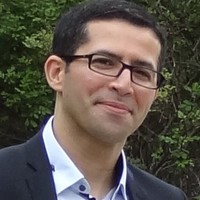 Pr. Ammi Mehdi is a Professor at the University of Paris 8. He is engineer in electronics (2000), PhD in robotics (2005) and Habilitaded to Supervise Research (HDR) in computer science since 2013. His research focuses on the study of pervasive environments and their societal and industrial applications (e-health, smart building, factory of the future, etc.). He addresses this field with a multidisciplinary approach combining artificial intelligence (machine learning, neurosciences, etc.), mechatronic technologies (organic electronics, smart textiles, etc.) and human factors (psychology, behavioral analysis, etc.). Mehdi Ammi was the leader or coleader of several international working groups (IEEE TCH, EuroVR Haptic SIG, etc.), and was involved in more than 20 national & international projects and industrial collaborations.
 Dr. Andrea Zanchettin was born in Cremona (Italy) in 1983. He received his PhD in Information Technology, from Politecnico di Milano in 2012. From January 2012 until February 2014, he has been research assistant at the Dipartimento di Elettronica, Informazione e Bioingegneria (DEIB). From March 2014 until September 2019, he has been a fixed-term assistant professor at DEIB where he is now a tenured Associate Professor. His research interests are about mechatronic systems, automatic control, and intelligent human-robot interaction. Since 2017, he has been co-founder and co-chair of the IEEE RAS Technical Committee on Collaborative Automation for Flexible Manufacturing (CAFM). Dr. Zanchettin is chair of the Italian Chapter of the IEEE RAS (I-RAS), as well as vice president for industrial activities of the Italian Institute of Robotics and Intelligent Machines (I-RIM). He is also co-founder and member of the Board of Directors of Smart Robots, a spin-off company of Politecnico di Milano.
 Dr. Jessie Yang is an Assistant Professor in the Department of Industrial and Operations Engineering at the University of Michigan, with a courtesy appointment at the School of Information. She obtained her PhD and MEng in Mechanical & Aerospace Engineering (Human Factors), and her BEng in Electrical and Electronic Engineering all from Nanyang Technological University, Singapore. Prior to joining U-M, she worked as a postdoctoral fellow at MIT. Dr. Yang's research interests include human-autonomy/robot interaction, human factors in high-risk industries, and user experience design. Her research has been funded by NSF, NIH, DoD, AAA Foundation for Traffic Safety, as well as industrial partners.
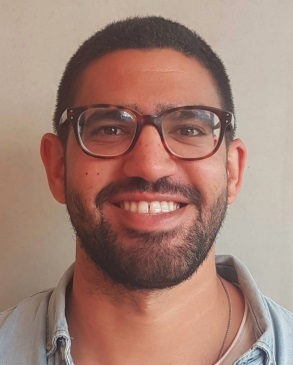 Mr. Amr Afifi received the bachelor's degree in engineering and material science from the German University in Cairo, Egypt, in 2014, the master's degree in Control Engineering from La Sapienza University, Rome, Italy, in 2019. He is currently working toward a Ph.D. degree with a focus on control methodologies for aerial robots in physical interaction with humans, at the Robotics and Mechatronics Lab at the University of Twente, Enschede, Netherlands, under the supervision of Professor Antonio Franchi. His main research interests lie in Interaction control, optimal control, trajectory optimization and human robot interaction.
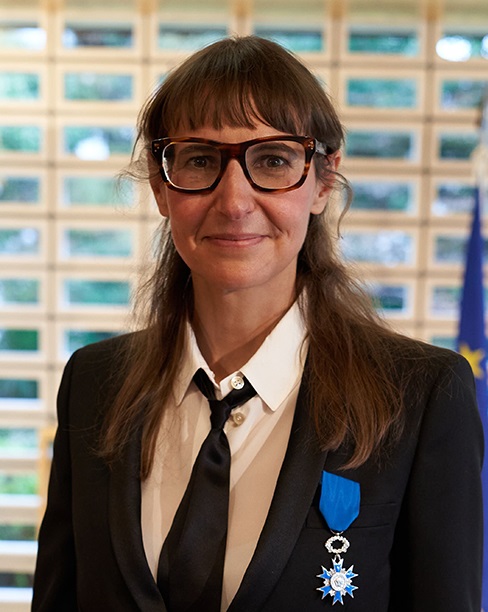 Pr. Gentiane Venture is a French Roboticist working in academia in Tokyo. She is a professor with the University of Tokyo and a cross appointed fellow with AIST. She obtained her MSc and PhD from Ecole Centrale/University of Nantes in 2000 and 2003, respectively. She worked at CEA in 2004 and for 6 years at the University of Tokyo. In 2009, she started with Tokyo University of Agriculture and Technology where she established an international research group working on human science and robotics, before moving to her present affiliation in 2022. With her group, she conducts theoretical and applied research on motion dynamics, robot control and non-verbal communication to study the meaning of living with robots. Her work is highly interdisciplinary, collaborating with therapists, psychologists, neuroscientists, sociologists, philosophers, ergonomists, artists and designers.
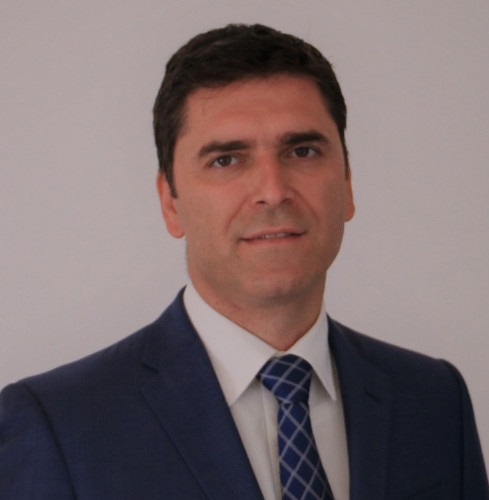 Dr. Sotiris Makris owns a Ms.C. degree in Mechanical Engineering and Aeronautics from the University of Patras (Greece) and a PhD in Engineering from the same university. He works as a Research Associate for the Laboratory for Manufacturing Systems and Automation from 2010 to present. He is an Associate Member of the International Academy for Production Research (CIRP), a member of the European Manufacturing and Innovation Research Association and a member of the Technical Chamber of Greece and of the Technical Chamber of Mechanical and Electrical Engineers. He has been serving as the Vice-chair of the CIRP Research affiliates from 2008 to 2011. He has been leading researcher teams towards accomplishing outstanding technical engineering achievements in manufacturing. He has given several scientific presentations and invited talks in International Workshops organised by the EC. He has more than 60 publications. His main research interests are focused on the field of Robots, Automation and Virtual reality in Manufacturing.
 Abdel-Illah Mouaddib is a professor at the University of Caen. He is the founder of Model, Agent and Decision research group of the GREYC Lab., CNRS UMR 6072. He received a PhD from the University of Nancy and INRIA-Lorraine. Pr. Mouaddib is a recipient of the European Conference on AI (ECAI-98) Best Paper Award and has a paper nominated for the award in the IJCAI'1999 (International Joint Conference on Artificial Intelligence). His research topics concern Markov Decision Models in multi-agent settings and interaction with humans. He developed several Decision and Game theoretic approaches applied to robotics. He validated his research results in the main conferences in the field of artificial intelligent and robotics (ECAI, IJCAI, AAAI, ICRA, IROS). He participated to several national and international projects: two NASA projects on Cooperative Robots (1999-2003) and European projects H2020 CHIST-ERA COACHES project (2014-2018). He was the principal investigator of many projects: MIC in DGA PEA TAROT program under supervision of THALES, ANR/DGA Robots_Malins project (2010-2012), ANR/DG ASTRID GARDES project (2014-2018), and Normandy valorisation VITA project (2018-2022). He has a strong collaboration with AIRBUS defense and space with almost 10 PhD Cifre programs, Nexter-Robotics, Thales and Dassault supported and co-funded 3 PhD in collaboration with DGA.

